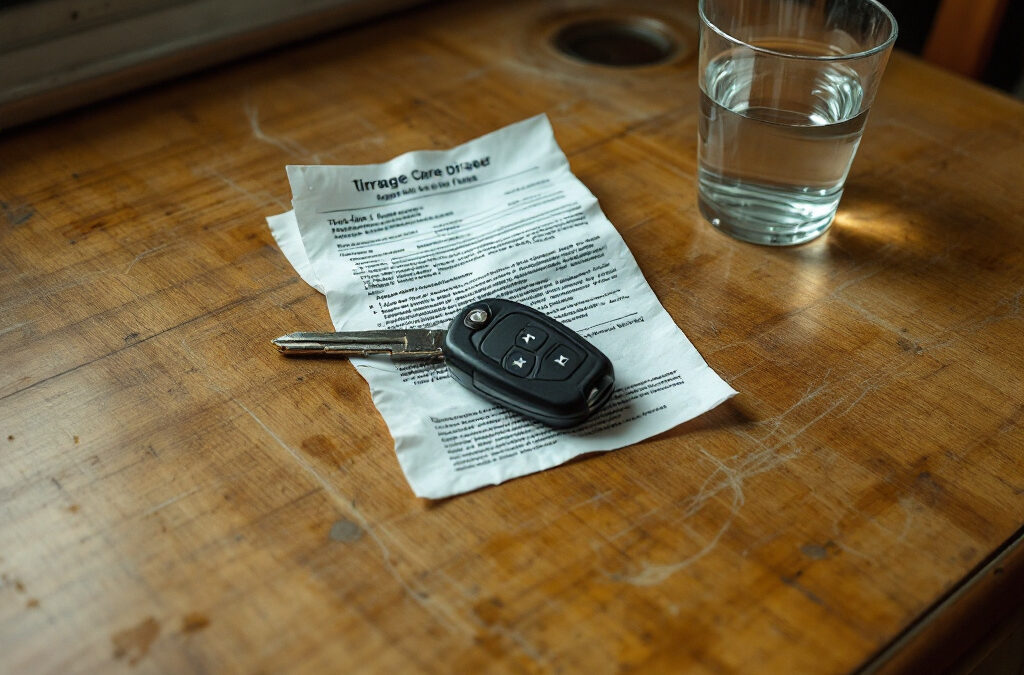

Felt fine right after your crash, and now your neck won’t turn? That’s one of the most common things people describe after a car accident. Pain can show up 24 to 72 hours later because adrenaline hides it at first and inflammation builds slowly. It doesn’t mean something went wrong. It means your body is doing exactly what bodies do.
Here’s what we’re hearing from people who walk in a few days after a wreck: “I thought I was okay.” We get it. And we want to explain why that happens, calmly, so you know where you stand.
What your body is doing right after a crash
Right after impact, your body floods with adrenaline and cortisol within seconds. These stress hormones dull your sense of pain on purpose, because in that moment your body treats survival as the only job that matters. Accurate pain signaling comes second.
So you walked away. You felt shaken, maybe a little rattled, but mostly okay. You told the other driver you were fine. You might have even driven yourself home.
That reaction is normal. The American Psychological Association describes this acute stress response as the body’s built-in alarm system, pushing blood to your muscles and muting other signals so you can act.
None of that means you escaped injury. It means your body hid the injury from you for a little while. The masking wears off. When it does, what was quiet starts to speak up.
If you want to understand your options locally, Taylor-Made Health & Wellness works with accident patients as an auto accident chiropractor in Clermont, in English or Spanish.
Why inflammation catches up with you 24 to 72 hours later
Inflammation catches up with you a day or two later because soft tissue injury triggers a repair response that builds over hours, not minutes. The swelling, stiffness, and pain that weren’t there right after the crash arrive as your body ramps up healing. Most people first notice real soreness between 24 and 72 hours out.
What’s a soft tissue injury? It’s damage to the muscles, ligaments, or tendons that hold your spine and joints together. These are the structures that get overstretched in a crash, and they often don’t show up on a standard X-ray.
Whiplash follows this delayed pattern closely. The rapid back-and-forth snap of your neck strains those tissues in a fraction of a second. They feel fine at first. Then the inflammatory response peaks, and the stiffness sets in.
According to the Mayo Clinic, whiplash symptoms usually appear within a few days of the injury. Some people notice them later, up to a week out. That lag is the whole reason “I feel fine” can be misleading.
The symptoms that tend to appear late, and what they mean
The symptoms that show up late are usually neck stiffness, shoulder tightness, upper or lower back pain, and headaches that start at the base of the skull. Fatigue and trouble concentrating are common too. These point to soft tissue strain and the inflammation that follows a crash.
Here’s what we’re hearing from you: the pain crept in slowly, and now you’re second-guessing whether it’s “bad enough” to deal with. That’s a fair question. And it does make physiological sense that it showed up when it did.
Headaches and mental fog after a crash deserve a closer look. They can be linked to a mild concussion, which clinicians call mild traumatic brain injury, or mild TBI. Even when it seems minor, it’s worth evaluating.
We’ll be straight with you. Diagnosing a concussion or ruling out a fracture often involves providers beyond chiropractic. A chiropractic evaluation is a first step, not the whole picture. The CDC notes that concussion symptoms can appear hours or days after the event, which is exactly why a late symptom isn’t something to brush off.
An evaluation isn’t about assuming the worst. It’s about getting clarity on what’s actually going on.

Why getting evaluated now still matters, even if you feel okay
Getting evaluated now matters because untreated soft tissue injuries can quietly progress. Scar tissue can form, range of motion can shrink, and mild stiffness can turn into a longer-lasting problem. Catching it early gives your body a better shot at healing well. We won’t promise a timeline or an outcome. We will tell you honestly what we find.
There’s also a real deadline, and it’s worth knowing. Under Florida law, to use your PIP coverage you must be seen by a provider within 14 days of the accident. Not call. Not file a report. Physically evaluated by a provider.
The Florida Department of Highway Safety and Motor Vehicles explains how no-fault PIP coverage works for Florida drivers. PIP covers 80% of reasonable medical expenses up to $10,000. We bill your PIP directly, and we’ll explain any balance before your care starts.
That 14-day window is a genuine deadline. We’re not using it to rush you. We’re telling you so you can make an informed choice while you still have the full option in front of you.

What a chiropractic evaluation actually looks for
A chiropractic evaluation starts with a conversation about the crash and how you’re feeling, followed by a physical exam of your spine and the areas that hurt. We check your range of motion, look at how you’re moving, and talk through what we find in plain words. The goal is understanding, not a sales pitch.
Chiropractic care focuses on the spine, joints, and the soft tissue around them. It’s gentle, non-invasive, and drug-free. No surgery. No medication.
And we’ll name what’s outside our scope, openly. If imaging points to a fracture, or if neurological signs suggest something beyond a musculoskeletal injury, we refer you out. That’s not us falling short. That’s how honest care is supposed to work.
From our experience, this is what tends to help most: care fitted to the person in front of us. No two crashes are the same. No two bodies respond the same way. We call it tailor-made because it’s built around what we actually find in your exam, not a standard package stamped on every patient who walks in.
Are there any other concerns you have? We’d rather you ask than wonder.
A note for Spanish-speaking patients in Clermont and the surrounding area
Your first visit can happen entirely in Spanish if that’s more comfortable for you. For about half of the people we see, Spanish is their first language, and it’s a real part of how we work, not a translation added on at the end.
Hablamos español. Entiendo su preocupación y quiero ayudarle a tratarla.
If you’d rather message than call, WhatsApp is open. You can write us, tell us what happened and how you’re feeling, and a real person will answer. No form, no runaround.
We serve accident patients across Clermont, Minneola, Groveland, and Winter Garden. Wherever you’re coming from nearby, the door’s open in whichever language you’re most at home in.

Key takeaways
- Adrenaline and cortisol mask pain right after a crash, so feeling fine at first is normal and doesn’t mean you’re uninjured.
- Soft tissue injuries like whiplash often show up 24 to 72 hours later, sometimes up to a week, as inflammation peaks.
- Late symptoms include neck and back stiffness, headaches at the base of the skull, fatigue, and trouble concentrating.
- Headaches and mental fog can be tied to a mild concussion (mild TBI) and deserve evaluation beyond chiropractic alone.
- In Florida, you must be seen by a provider within 14 days of the accident to use your PIP coverage.
- PIP covers 80% of reasonable medical expenses up to $10,000. We bill PIP directly and explain any balance before care starts.
Frequently asked questions
Why did my neck start hurting two days after my car accident?
Your neck likely started hurting two days later because adrenaline masked the pain at first, then faded while inflammation from soft tissue strain built up. Whiplash often follows this pattern. The rapid motion of a crash overstretches muscles and ligaments that feel fine until the body’s repair response peaks a day or two out.
Can I be injured in a crash even if I felt fine afterward?
Yes. Feeling fine right after a crash is common and doesn’t rule out injury. Stress hormones suppress pain in the moments after impact, and soft tissue damage can take 24 to 72 hours to produce noticeable symptoms. That’s why getting evaluated matters even when you walked away feeling okay.
How long after a car accident can whiplash symptoms appear?
Whiplash symptoms usually appear within a few days of the crash, according to the Mayo Clinic, though some people notice them up to a week later. The delay happens because inflammation in the strained neck tissues builds over hours and days, not instantly. A late onset is normal, not a reason to assume you’re in the clear.
What is the Florida PIP 14-day rule?
The Florida PIP 14-day rule requires you to be seen by a provider within 14 days of the accident to use your personal injury protection coverage. This means a physical evaluation, not a phone call or report. PIP then covers 80% of reasonable medical expenses up to $10,000.
Will I get a bill after a car accident evaluation?
Florida PIP covers 80% of reasonable medical expenses up to $10,000, so there can be a remaining balance. We bill your PIP insurance directly and explain any balance to you before your care begins. If an attorney is handling your case, a letter of protection may apply, where your medical bills are paid from your case settlement.
Does a chiropractor treat concussions from a car accident?
A chiropractor can evaluate you after a crash and recognize signs of a possible concussion, but diagnosing and managing a concussion often involves other providers. If headaches, fog, or neurological symptoms suggest a mild traumatic brain injury, we refer you to the right specialist. Chiropractic care addresses the spine, joints, and soft tissue.
If you were recently in a crash and you’re sore now, or still not sure, the simplest next step is to come in and talk it through. Call us or message us on WhatsApp, tell us what happened, and we’ll walk you through what we find, in English or Spanish. We’re here to help.
This article is for general information and is not medical or legal advice. For guidance about your specific situation, please speak with a qualified provider.