
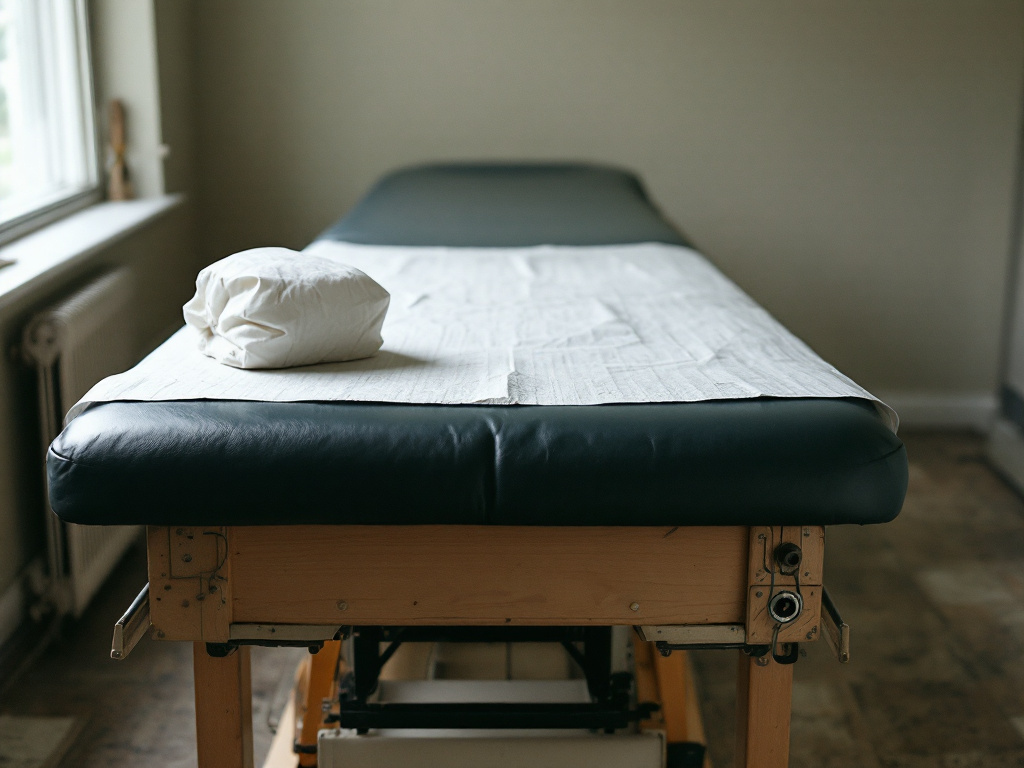
What Chiropractic Care After a Car Accident Actually Looks Like
If you were recently in a car accident and someone told you to see a chiropractor, here’s the short version: chiropractic care after an auto accident evaluates and treats the soft-tissue injuries a crash causes, like whiplash and back strain, that scans often miss. Care usually starts with an exam, moves through a phase of treatment, and gets adjusted as you improve. Most of it, for Florida drivers, is covered by your auto insurance.
I’m Dr. JP Silvera, and I run an auto-injury practice in Clermont, Florida. Half my patients speak Spanish first. Most arrive worried about bills, unsure they even need care, and a little skeptical of chiropractic in general. That’s normal. This article walks through what care actually involves, who pays, and what happens outside our scope. No hype. Just how it works.
If you feel fine right now, that makes sense
Feeling okay after a crash doesn’t mean you weren’t hurt. That’s the single most important thing to understand about auto-accident injuries. After a collision, your body floods with adrenaline and stress hormones, and those chemicals dull pain signals for hours or even a day or two. So you can walk away feeling fine and start hurting later.
This is what people call delayed-onset whiplash, and it’s common. The American Academy of Orthopaedic Surgeons notes that whiplash symptoms frequently show up hours to a couple of days after the injury, not right away.
Here’s what tends to surface two to four days out:
- Stiffness in the neck and shoulders
- Headaches that start at the base of the skull
- Trouble turning your head
- Fatigue that doesn’t match your sleep
- Tightness in the lower back
If you feel none of that today, good. But getting checked isn’t about generating visits. It’s about setting a baseline, so you know what is and isn’t there. You get to decide what to do with that information.
What actually happens to your body in a collision
In a crash, your head whips faster than your body can brace for, and the soft tissue in your neck absorbs force it wasn’t built to handle. That’s the core of it. In a rear-end hit, your torso gets pushed forward by the seat while your head lags behind for a split second, then snaps back. Tendons and ligaments in the cervical spine, the part of your spine that runs through your neck, take the strain.
This is why the ER can send you home with a clean scan and you still hurt three days later. X-rays and CT scans show bone. They don’t show a stretched ligament or a strained muscle. According to the National Institute of Neurological Disorders and Stroke, whiplash-type neck injuries involve soft tissue that standard imaging often doesn’t capture.
Here’s what we evaluate at our practice:
- Whiplash and cervical strain (neck)
- Lumbar strain (lower back)
- Headaches tied to cervical tension
- Screening for concussion symptoms
One honest note on that last one. We screen for signs of concussion, but a concussion is a brain injury, and diagnosing it is a physician’s job, not ours. If we see red flags, we say so and point you to the right doctor. More on that below.

What your first visit looks like, step by step
Your first visit is a conversation, an exam, and a plain-language explanation of what we found. That’s the whole shape of it. You arrive, you tell us what happened and how you’re feeling, and we listen before we touch anything. This isn’t a seven-minute intake where you’re rushed through a form and out the door.
The physical exam checks a few specific things:
- Range of motion, meaning how far you can move your neck and back without pain
- Areas of tenderness, where we press gently to find what’s irritated
- Posture and alignment
- A neurological screen where it’s warranted, checking reflexes and sensation
At the end, we tell you three things: what we found, what we can help with, and what we can’t. If something needs a different provider, you’ll hear that from us directly. Fractures go to an orthopedist. Concussion diagnosis goes to a physician. Surgical questions get referred out.
And if Spanish is your first language, you’re seen in Spanish, by someone who speaks it natively. Not through a staff member translating on the fly.
Who handles the insurance and the paperwork
For most Florida drivers, your auto insurance covers this care, and you won’t get a surprise bill for treatment your PIP policy covers. Personal Injury Protection, or PIP, is the part of your Florida auto insurance that pays for medical treatment after a crash, no matter who caused it. Florida requires all drivers to carry it, per the Florida Department of Highway Safety and Motor Vehicles.
There’s one timing detail worth knowing. Florida PIP requires you to seek treatment within 14 days of the accident to use that coverage. That’s the rule, stated plainly. I’m not going to dress it up as an emergency. Just know the window exists so you can act inside it.
We handle the billing and the documentation with your insurer. You don’t manage that process.
If PIP isn’t available or it runs out, there’s another path called a Letter of Protection, or LOP. That’s an arrangement where your attorney agrees the treatment costs get settled from your case later. It’s a billing path that removes a barrier to care, nothing more. It has nothing to do with the size of any outcome, and I won’t connect the two. Your care is based on your injury. Full stop.
What a course of care usually looks like
Most soft-tissue injuries from car accidents respond well to chiropractic care, but how many visits and how long it takes depends on your specific injury. I won’t give you a fixed number on day one, because I don’t know it yet, and neither does anyone honest.
The general shape looks like this. Care starts with a more concentrated phase while symptoms are sharpest. As you improve, visits taper off. Then we reassess to see where you actually stand.
Along the way we may use a few different things:
- Spinal manipulation: gentle, controlled movement applied to stiff joints to restore normal motion and ease nerve irritation
- Soft tissue work on tight or strained muscles
- Therapeutic exercise you can do to rebuild strength
- Postural guidance for how you sit, stand, and sleep
A 2016 review in the Journal of Orthopaedic & Sports Physiotherapy found manual therapy and exercise effective for many mechanical neck disorders, which covers a lot of what we see after accidents.
Some people feel real improvement in a few weeks. Some injuries take longer. We tell you where you are as we go, not at the end. And we adjust the plan to how your body actually responds, not to a template.
What falls outside what we do
Chiropractic care does not diagnose or treat fractures, internal organ injury, arterial damage, or moderate-to-severe traumatic brain injury. I’m putting that in writing on purpose. Naming our limits is how you can tell a truth-teller from a clinic that just keeps you on the schedule.
Here’s the honest boundary. If our exam or your history raises concern for any of those serious problems, we tell you straight and refer you to the provider who handles it. We don’t sit on it.
Concussion is a clear example. We screen for symptoms, but evaluating a concussion beyond that basic screen belongs to a physician or neurologist. The Centers for Disease Control and Prevention lists warning signs like worsening headache, confusion, and repeated vomiting that need medical attention. If we see those, you’re going to hear us say so.
We also don’t treat conditions unrelated to your accident inside a PIP case. That’s not what the coverage is for, and stretching it would be dishonest.
Direct, calm, not apologetic. Naming what we can’t do is something the assembly-line clinic never bothers to say out loud.
A note for Spanish-speaking patients
Aquí lo van a atender en español, por alguien que lo habla como primer idioma. No a través de un empleado que traduce a un lado mientras el doctor espera. La consulta, el examen, el plan de tratamiento y las preguntas sobre el papeleo del seguro, todo en su idioma.
Sabemos que manejar un reclamo por lesiones en un segundo idioma agrega estrés de verdad. Uno ya está adolorido, preocupado por las cuentas y el trabajo, y encima tiene que entender términos de seguros en un idioma que no es el suyo. Quitarle ese peso es parte del cuidado, no un extra.
Para pacientes de habla hispana, WhatsApp es la forma más fácil de comunicarse con nosotros. Nos escribe, nos cuenta qué pasó, y le respondemos una persona real. Cuéntenos cómo se siente y seguimos desde ahí.
Key takeaways
- Feeling fine after a crash is normal and doesn’t rule out injury. Adrenaline masks pain, and whiplash often surfaces two to four days later.
- X-rays and ER scans show bone, not soft tissue, which is why you can hurt after a clean scan.
- A first visit is a conversation, an exam, and a plain explanation of what we found and what we can and can’t help with.
- Florida PIP covers accident treatment regardless of fault, but you have 14 days from the crash to seek care and use it.
- Care starts concentrated, tapers as you improve, and gets adjusted to how you actually respond.
- We refer out fractures, concussion diagnosis, and anything beyond our scope. Naming those limits is the point, not a weakness.
- Spanish-first patients are seen and served in Spanish, with WhatsApp as the easiest way to reach us.
Frequently asked questions
How soon should I see a chiropractor after a car accident?
Sooner is better, mostly because Florida PIP gives you 14 days from the crash to seek treatment and use that coverage. Beyond the paperwork, an earlier visit sets a baseline before delayed symptoms cloud the picture. If you feel fine, getting checked still tells you where you stand.
Do I need a referral to see a chiropractor after an accident?
No, you don’t need a referral to see a chiropractor for car accident injuries in Florida. You can come in directly. Many patients arrive because their attorney suggested treatment, but that’s a recommendation, not a requirement. You can call, text, or message us on your own.
Will I get a bill for chiropractic care after my accident?
For care covered under your Florida PIP policy, you shouldn’t get a surprise bill. PIP pays for accident-related medical treatment regardless of fault. We handle the billing and documentation with your insurer. If PIP is exhausted, a Letter of Protection may be an option to discuss.
Can chiropractic care help if my scans came back clean?
Yes, often. Clean X-rays or CT scans rule out broken bones, but they don’t show soft-tissue injuries like whiplash, cervical strain, or lumbar strain. Those involve muscles and ligaments that standard imaging doesn’t capture. A hands-on exam evaluates what the scan can’t.
What if my injury turns out to be serious?
Then we tell you directly and refer you to the right provider. Chiropractic care doesn’t diagnose or treat fractures, internal injuries, or serious brain injury. If our exam raises concern, you’ll hear it from us and get pointed to an orthopedist, physician, or neurologist as needed.
Before you decide
If you were recently in an accident, come in and tell us what’s going on. We’ll listen, examine you, and explain what we find in plain words. We’ll be honest about what we can help with and about anything that’s outside what we do. And we’ll handle the insurance paperwork for you.
Hurt in a car accident? Learn about our car accident chiropractic care in Clermont, including same-day exams and help with your PIP claim.