

Chiropractic Adjustment Techniques: What They Are, How They Work, and What to Expect
A chiropractic adjustment is a controlled, targeted force applied to a joint to restore normal movement and calm down pain signals coming from that area. If you were recently in a car accident and you’re trying to figure out whether chiropractic care makes sense for you, this guide walks through the main techniques, what a first visit actually looks like, and what chiropractic can and can’t help with. Written for people who want straight answers, not a sales pitch.
Dr. JP Silvera treats auto-injury patients in Clermont, Florida, and everything here reflects how careful chiropractic care actually works, including the honest limits.
What a chiropractic adjustment actually does
A chiropractic adjustment is a quick, controlled push applied to a specific joint to help it move the way it should again. When a joint gets stiff or restricted after an injury, the surrounding tissue and nerves react. Restoring normal motion to that joint can reduce pain and improve range of movement.
Here’s the reasoning, in plain terms. Your spine is a stack of joints. After a crash, some of those joints lock up or move less than they should. That restriction irritates the tissue around it. An adjustment aims to free up that motion so the area calms down.
About that cracking sound. It’s gas releasing from inside the joint, similar to the pop you hear when you crack a knuckle. It is not bones grinding together, and the sound itself is not the point of the treatment.
One thing an adjustment does not do: it does not shove a bone into a new permanent spot in a single visit. That’s a common myth. According to the American Chiropractic Association, spinal manipulation restores movement and function, and lasting change comes from a course of care plus how your body responds.
The main techniques chiropractors use — and why the choice matters
Chiropractors use several spinal manipulation techniques, and the right one depends on the patient, the injury, and how acute the pain is. No single technique works best for everyone. A careful chiropractor screens first, then picks the approach that fits.
Here are the main ones you’ll run into:
- High-velocity low-amplitude (HVLA): the traditional hands-on thrust. Quick, shallow, and precise. It’s effective for many mechanical problems, but it isn’t the right starting point when an area is acutely inflamed.
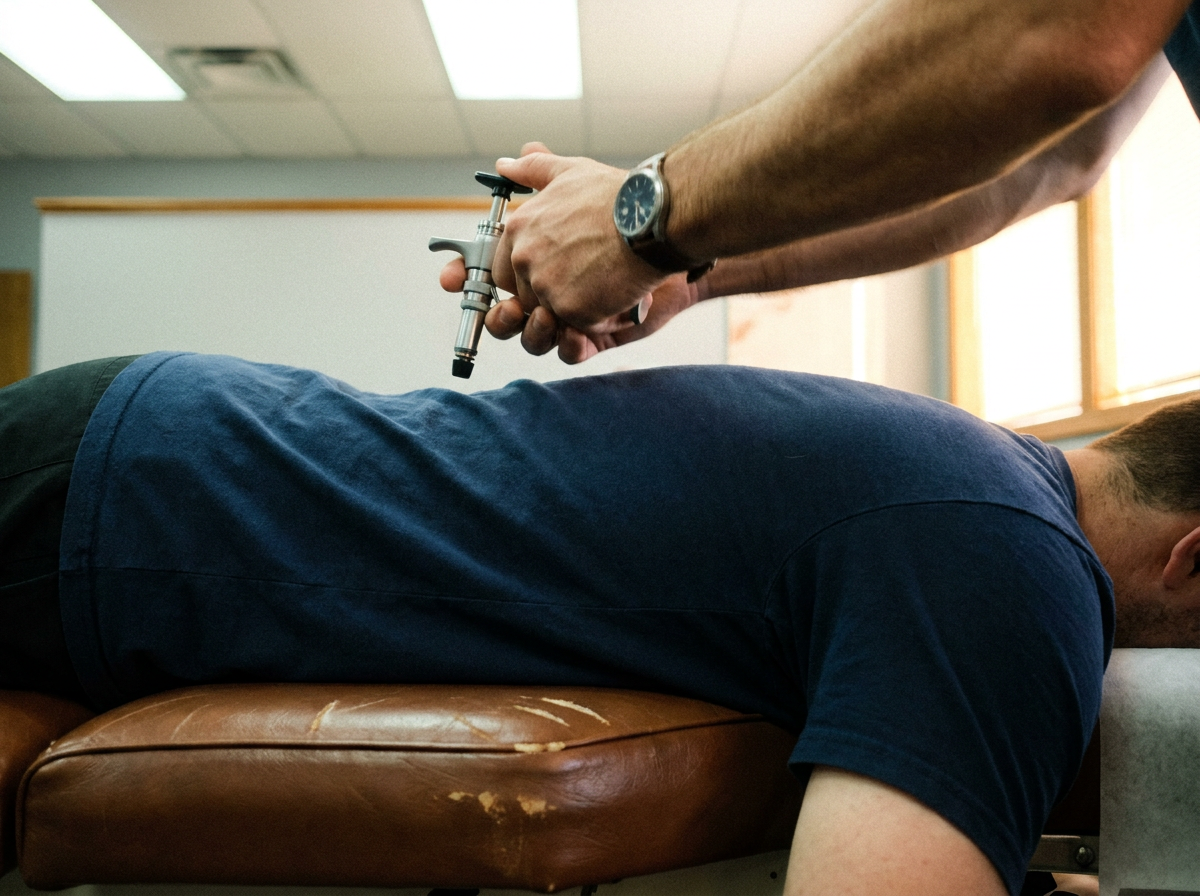
- Instrument-assisted (e.g., Activator): a small handheld tool delivers a light, controlled impulse. Lower force. Useful for patients who are inflamed, older, or nervous about a manual thrust.
- Flexion-distraction: done on a special table that gently stretches and moves the spine. Often used for disc-related pain and nerve compression. It feels like a slow, rhythmic stretch, not a pop.
- Soft tissue and mobilization work: the muscles around a joint matter as much as the joint. Loosening tight tissue often comes alongside the adjustment itself.
Now the honest part. Some presentations are off-limits for manipulation. Fractures, severe joint instability, and certain vascular conditions are contraindications. The National Center for Complementary and Integrative Health notes that a proper exam and screening should come before any hands-on treatment. That screening isn’t a formality. It’s how a good chiropractor decides whether to adjust at all.
Chiropractic adjustment after a car accident: what is different
Care after a car accident is different because the injury is usually acute, which means inflammation is still active. When tissue is freshly inflamed, most chiropractors start with lower-force techniques and build from there, rather than leading with a firm manual thrust.
Whiplash is a good example of why this matters. It affects more than the neck. The cervical spine, the muscles around it, and the connective tissue all take the strain when your head snaps forward and back. That’s why symptoms can feel spread out instead of pinned to one spot.
Delayed onset is the part that catches people off guard. You can walk away from a crash feeling fine, then wake up two or three days later genuinely hurting. That’s common with soft-tissue injury, and it doesn’t mean something went wrong. Research summarized by the Mayo Clinic notes whiplash symptoms often show up within the first few days after the injury.
The first visit after an accident starts with intake, a full history, and orthopedic and neurological screening before anyone touches your spine. Documentation matters here too. The clinical record reflects what is actually found on exam, not what anyone hopes to find. We handle the insurance and paperwork separately from your care, so you don’t have to carry that into the room.
What to expect at your first chiropractic visit
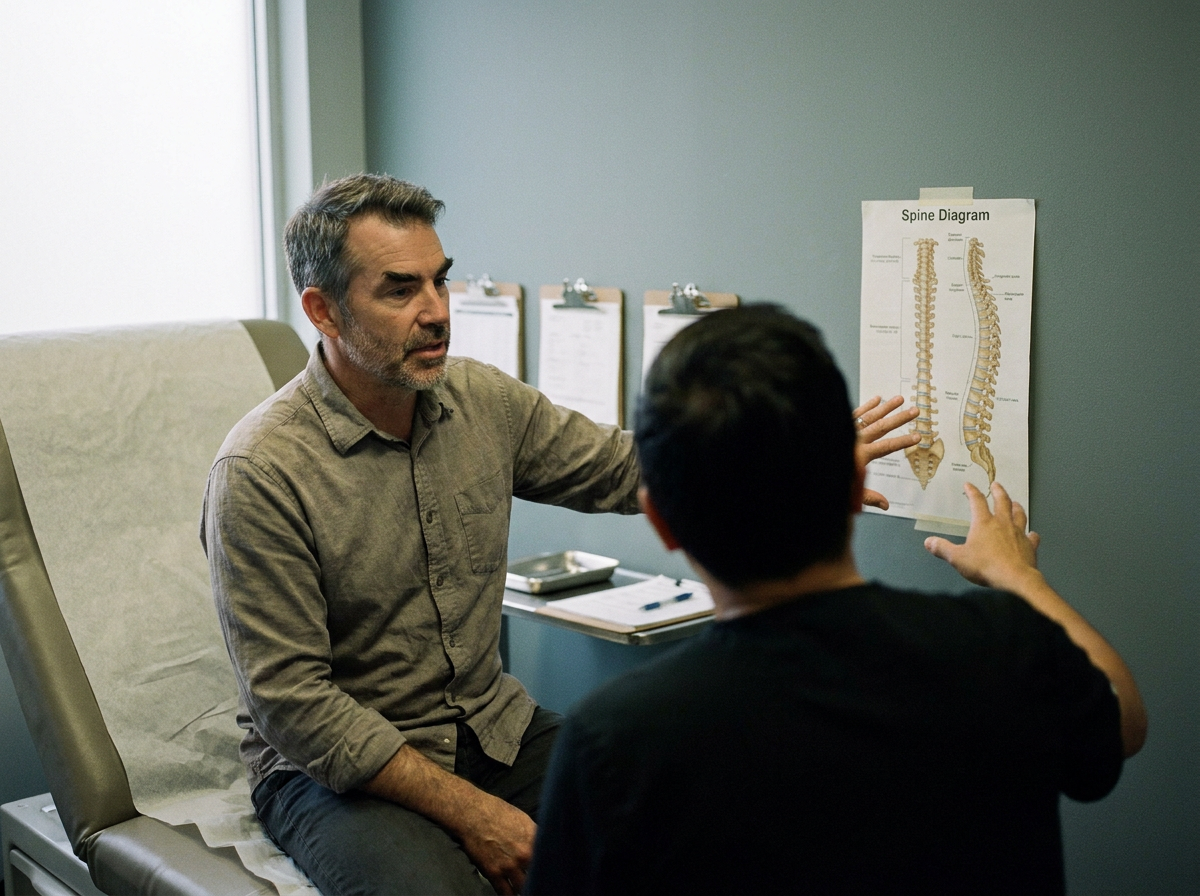
Your first chiropractic visit is mostly conversation and assessment, not treatment. You’ll fill out intake paperwork, talk through your symptoms and what happened, and go through a physical exam. Only after the chiropractor has reviewed the findings with you does any hands-on work happen, and only if it’s appropriate.
Step by step, it usually goes like this:
- Intake paperwork and history.
- A conversation about what you’re feeling and how the injury happened.
- Physical assessment, including range-of-motion and neurological checks.
- The chiropractor explains what they found, in plain words.
- If it makes sense, a first treatment.
Nothing gets adjusted before that conversation. That’s the point. You should understand what’s going on before anyone works on you.
A couple of honest notes. First visits take longer because of the intake and exam. Follow-ups are shorter. And you might feel mild soreness the next day, similar to how you feel after starting a new workout. That’s your body responding to movement it hasn’t done in a while, and it usually settles quickly.
You have time to ask questions at every stage. Are there any other concerns you have? That question should be part of the visit, not an afterthought.
How many visits and how long does care take
The honest answer is that it depends on the injury, how long you’ve had symptoms, and how your body responds to care. Anyone who gives you an exact number before examining you is guessing. A real care plan gets adjusted as you improve.
For a common presentation like acute whiplash, care tends to run as a defined course over a set number of weeks, not an open-ended stream of visits. The Agency for Healthcare Research and Quality and multiple clinical reviews support time-limited, active care for soft-tissue neck injury over indefinite passive treatment.
Here’s how progress gets tracked:
- Range of motion, measured over time.
- Pain scale, checked at visits.
- Functional improvement, meaning what you can actually do again.
And here’s the part that separates careful care from a mill. The goal is to get you to the point where you no longer need ongoing care. If you’re wondering whether you really need that many visits, ask. A good chiropractor will show you the reasoning and name the exit point, not keep you coming indefinitely.

What chiropractic care can help with — and what it cannot
Chiropractic care helps with mechanical neck and back pain, whiplash-associated disorder, joint stiffness after trauma, and headaches that have a neck-related (cervicogenic) component. These are the conditions where restoring joint movement and treating surrounding tissue tends to make a real difference.
Just as important is what falls outside chiropractic scope. Some things need a different specialist or co-management:
- Fractures.
- Severe disc herniation with progressive neurological deficit (worsening weakness, numbness, or loss of function).
- Concussion management beyond the musculoskeletal part.
- Suspected internal organ injury.
If an exam or imaging points to something outside what chiropractic treats, the right move is a referral to the appropriate provider. That’s standard practice, not a rare exception. The Cleveland Clinic describes screening and appropriate referral as part of responsible chiropractic care.
Read this section as a trust signal. A clinic willing to tell you what it can’t fix is a clinic telling you the truth about what it can. That’s the whole point of naming limits out loud.
Choosing the right chiropractic clinic for your situation
The right chiropractic clinic runs a thorough intake, explains its findings before starting treatment, and communicates honestly about what is and isn’t within its scope. Those three things tell you more than any online rating.
Watch for a few red flags:
- A clinic that promises guaranteed outcomes. No honest provider guarantees results.
- Adjusting on the first visit with no real exam first.
- Any framing that ties the number of your visits to a financial result. Care should be about your body, full stop.
For Spanish-speaking patients, being treated in your own language isn’t a nice extra. It’s the difference between understanding your care plan and nodding along to something you didn’t fully catch. Native bilingual care means you actually follow what’s happening and why.
On the practical side, a good clinic handles PIP billing and paperwork so you’re not managing it yourself. That’s about taking the friction off your plate, nothing more.
If you’re in Clermont, Minneola, Groveland, or the wider Lake County area, look for a practice that knows this community and treats auto-injury cases regularly. Local matters when you’re going in more than once.

Key takeaways
- A chiropractic adjustment is a controlled force applied to a joint to restore movement and reduce pain. The popping sound is gas releasing, not bones grinding.
- The main techniques are HVLA (manual thrust), instrument-assisted (lower force), and flexion-distraction (table-assisted for disc pain). The right one depends on you and your injury.
- After a car accident, inflammation is usually active, so care often starts with lower-force techniques.
- Whiplash symptoms can show up two or three days after a crash. Feeling fine at first doesn’t mean you’re uninjured.
- A first visit is intake, history, and exam before any adjustment. Nothing happens without explanation first.
- Chiropractic helps with mechanical neck and back pain and whiplash. Fractures, severe disc problems with nerve involvement, and internal injuries need other care.
- The goal of care is to no longer need care. Watch for clinics that guarantee outcomes or tie visit counts to money.
Frequently asked questions
What happens during a chiropractic adjustment?
The chiropractor applies a quick, controlled force to a specific joint to restore its normal movement. You may hear a popping sound, which is gas releasing from the joint. Most adjustments take seconds, and a careful chiropractor explains what they’re doing and why before starting.
Is a chiropractic adjustment safe after a car accident?
Chiropractic care can be appropriate after a car accident, but only after a proper exam and screening. Because inflammation is usually still active, many chiropractors start with lower-force techniques. Fractures and severe nerve involvement are contraindications, which is why the exam comes first.
How is manual adjustment different from instrument-assisted?
Manual (HVLA) adjustment uses a hands-on thrust. Instrument-assisted adjustment, like the Activator, uses a small handheld tool to deliver a lighter, more targeted impulse. Instrument-assisted is often chosen for patients who are acutely inflamed, older, or uneasy about manual contact.
How many chiropractic visits will I need for whiplash?
It depends on how bad the injury is, how long you’ve had symptoms, and how you respond. Acute whiplash usually involves a defined course of care over several weeks rather than open-ended visits. Progress gets tracked through range of motion, pain level, and function.
Will a chiropractic adjustment hurt?
Most adjustments aren’t painful. Some people feel mild soreness the next day, similar to starting a new exercise routine, and it usually settles quickly. If an area
Hurt in a car accident? Learn about our car accident chiropractic care in Clermont, including same-day exams and help with your PIP claim.