

Back pain and neck pain: what a chiropractic adjustment actually does, and whether it makes sense for you
If your back or neck has been hurting since a car accident, or the stiffness just won’t let up, a chiropractic adjustment is a controlled, targeted movement applied to a spinal joint that has lost its normal range of motion. It’s meant to restore that motion and take pressure off the surrounding muscles and nerves. This article explains what an adjustment is in plain words, how back and neck pain respond to it, what your first visit looks like, and where chiropractic care stops and something else begins.
Dr. JP Silvera treats auto-accident and everyday spinal injuries at Taylor-Made Health & Wellness in Clermont, Florida, in English and Spanish. What follows is the same honest walk-through we’d give you in the room.
This article is general information, not medical advice. A proper exam is the only way to know what’s going on with your specific injury.
What most people feel before they call us
Here’s what we usually hear. A dull ache across the lower back that flares when you stand up. A neck that won’t turn one direction without a sharp catch. Tension that sits between the shoulder blades and never fully lets go. For some people it started the morning after a crash. For others it built up so slowly they can’t name the day it began.
And a lot of people call us unsure whether chiropractic is even the right move.
That’s fair. Some of you have heard good things from a friend and some of you flat-out don’t trust it. We’re not going to talk you out of that skepticism. We’d rather earn the answer with you, calmly, by explaining what we actually do and what the research actually says.
You don’t have to decide anything today. You can read this, sit with it, and see if it lines up with how you’re feeling. No rush here.
What a chiropractic adjustment is, in plain words
A chiropractic adjustment, also called spinal manipulation, is a quick, controlled push applied to a specific joint in your spine that isn’t moving the way it should. The goal is to bring that joint back to its normal range of motion. The American Chiropractic Association describes it as manual therapy focused on restoring joint function, not forcing anything out of place.
That popping sound worries people. It shouldn’t. According to Harvard Health Publishing, the pop is gas releasing from the fluid inside the joint, the same thing that happens when you crack a knuckle. It isn’t bone grinding on bone, and it isn’t a sign of damage.
It’s also not one move for everyone. Some techniques use a fast, low-force thrust by hand. Others use a small spring-loaded instrument or a drop-piece table that does the work more gently. What we pick depends on you, your age, and what the exam turns up.
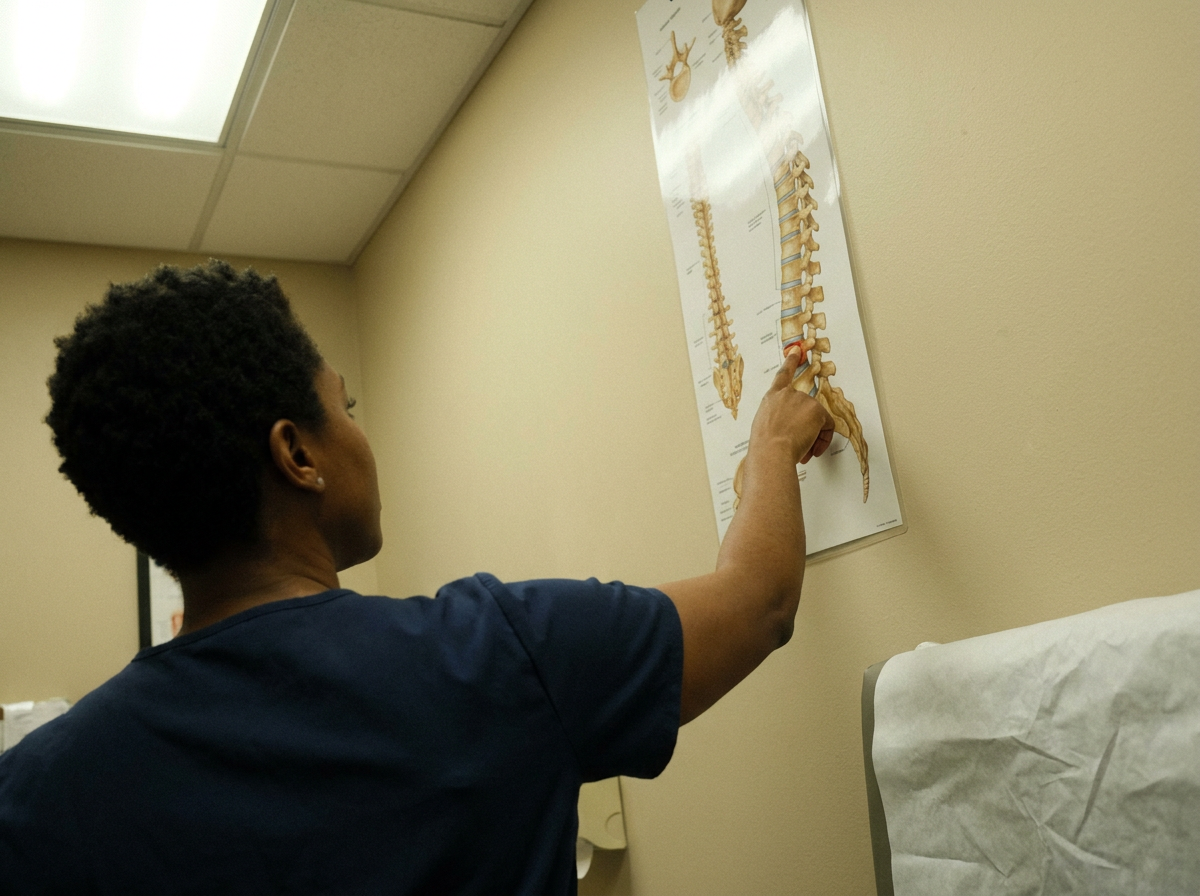
Before any of that, the chiropractor is checking which joints move, which don’t, and where your pain actually lives.

How back pain and neck pain actually respond to adjustment
When a spinal joint stops moving properly, the muscles around it tighten to protect it, and that tension can irritate nearby nerves and send pain to places you wouldn’t expect. Restoring motion to the joint often calms that whole chain down. That’s the mechanism behind why adjustment helps so many people with mechanical back and neck pain.
The evidence backs this for the right complaints. A 2018 study in JAMA Network Open found that adults with low back pain who added spinal manipulation to usual care reported less pain and better function over six weeks than those who got usual care alone.
Here’s what we’re comfortable saying it helps with: mechanical low back pain, neck stiffness, headaches that start in the neck, and the soft-tissue strain that comes with whiplash.
And here’s what it doesn’t fix, which we’ll tell you straight. Fractures. Disc problems that need a surgical opinion. Systemic disease. Red-flag signs like unexplained weight loss, fever with back pain, or changes in bladder or bowel control. If we see any of that, adjustment isn’t the answer, and we’ll point you to who is.
Naming those limits isn’t us hedging. It’s the whole reason you can trust the rest.
Why pain after a car accident is its own situation
Pain after a crash follows its own timeline. You can walk away from a wreck feeling shaken but basically fine, then wake up two days later unable to turn your head. That’s not you imagining things. That’s how the body reacts to injury after the adrenaline drains off.
Whiplash is the common one. In a rear-end hit, your head snaps forward and back faster than the neck muscles can brace for it, straining the soft tissue in the neck and upper back. The National Institute of Neurological Disorders and Stroke notes that whiplash symptoms often show up hours to days later, which is exactly why “I feel okay” doesn’t mean much on day one.
Getting checked early matters for your body, plain and simple. The sooner we understand what the tissue is doing, the sooner we can help it settle instead of stiffening into something that lingers.
On the money side, we keep it simple. We handle your PIP billing directly. For care covered under your policy, you don’t get a bill from us. That’s it. Getting checked is about how you heal, nothing else.
What your first visit actually looks like
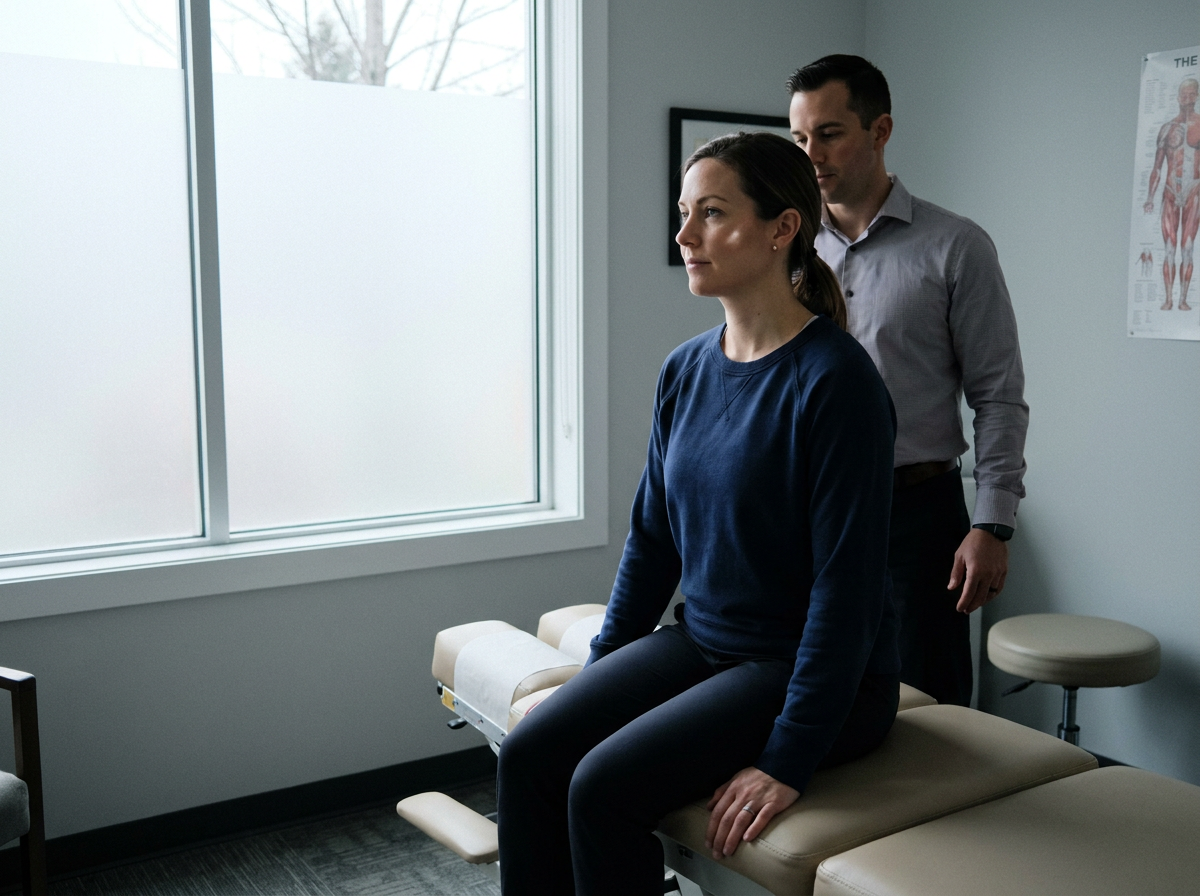
Your first visit is a conversation before it’s anything else. We sit down and you tell us what happened and how you’re feeling. Then we do a physical and orthopedic exam, checking range of motion, reflexes, and where the pain points are. Only after that do we explain what we found and talk through a plan.
Nothing gets done to you before you understand it and agree to it. That’s a hard line for us.
People always ask how many visits they’ll need. The honest answer is that it depends on what the exam shows. Some soft-tissue cases settle in a handful of sessions. Others take longer. We’ll tell you what we expect and why, and we’ll adjust as your body responds.
The pace is unhurried on purpose. You get our full attention, and you can ask a question at any step without feeling like you’re slowing us down.
Most of the fear people carry into that room is fear of the unknown. Once you know what’s coming, it gets a lot smaller.
Questions people ask before their first adjustment
Does it hurt? Most people feel pressure during the adjustment and relief after. Some feel mild soreness for a day or so following the first visit, a bit like after a good workout. That’s normal and it passes quickly.
Is it safe? For neck and back pain, adjustment has a well-established safety record when it follows a proper exam. Harvard Health notes serious complications are rare. The exam exists partly to catch the uncommon cases where adjustment isn’t appropriate, which is exactly why we don’t skip it.
Will I have to come back forever? No. We build a care plan around what your injury needs, then it ends. We’re not selling a standing appointment.
Do I need a referral? No. You can come in for a walk-in evaluation without one.
What if I feel fine but was just in an accident? Still worth an exam. How you feel on day one is often not where you’ll be on day four, and catching a soft-tissue injury early gives your body a better shot.
What we can help with at Taylor-Made, and what we will tell you honestly if we cannot
At Taylor-Made Health & Wellness, Dr. JP Silvera treats whiplash, post-accident neck and back pain, muscle-tension headaches, general mechanical back pain, and spinal stiffness. Those are the complaints an adjustment tends to help, when the exam supports it.
And if the exam points somewhere else, we say so. If your case needs imaging or a specialist, we’ll tell you directly and help you get to the right person instead of stringing you along with visits that won’t move the needle for you.
Care here happens in English or Spanish, both spoken natively, not read off a translated script. If Spanish is where you’re most comfortable, that’s how the whole conversation goes.
We serve Clermont, Minneola, Groveland, and the greater Lake County area.
The thing we can promise is this: before we do anything, you’ll know what we found, what we think it means, and what we recommend. That’s the whole approach.
Key takeaways
- A chiropractic adjustment is a controlled, targeted movement that restores motion to a spinal joint that has stopped moving normally.
- The popping sound is gas releasing from the joint, not bone damage, according to Harvard Health.
- Adjustment helps many people with mechanical back pain, neck stiffness, neck-origin headaches, and whiplash, and a 2018 JAMA Network Open study found it reduced low back pain when added to usual care.
- Fractures, surgical disc conditions, systemic disease, and red-flag symptoms fall outside chiropractic scope, and an honest clinic will refer you out.
- After a car accident, symptoms often surface days later, so getting checked early matters for your recovery.
- Taylor-Made handles PIP billing directly, so you don’t get a bill for covered care.
- Your first visit is an exam and a conversation before any treatment, and nothing happens without your understanding and agreement.
Frequently asked questions
How soon after a car accident should I see a chiropractor?
Sooner is better for your body, since whiplash and soft-tissue injuries often surface a day or two after the crash. Getting examined early lets a chiropractor spot injuries before they stiffen and helps document what’s happening. You don’t need to be in severe pain to get checked.
Can a chiropractic adjustment help neck pain, or just back pain?
Yes, adjustment is commonly used for neck pain, including stiffness and headaches that originate in the neck. The technique differs from lower-back work and is chosen based on your exam. As with any complaint, a proper evaluation comes first to confirm adjustment is appropriate for your situation.
How many chiropractic visits will I need for back pain?
It depends on what the exam finds. Some soft-tissue cases settle within a handful of visits, while more involved injuries take longer. A trustworthy clinic explains what it expects and why, then adjusts the plan as you respond. Care should end when the condition resolves, not continue on a standing schedule.
Will I get a bill if my chiropractic care is from a car accident?
For care covered under your Florida PIP coverage, Taylor-Made bills your insurance directly and you don’t receive a bill for covered care. The practice handles the paperwork so you can focus on recovering. Coverage specifics depend on your policy, which we’ll walk through with you.
Is chiropractic care safe for neck and back pain?
Adjustment for neck and back pain has a well-established safety profile when performed after a proper exam, and serious complications are rare per Harvard Health. The exam exists to catch the uncommon cases where adjustment isn’t suitable, such as certain fractures or disc conditions, before any treatment begins.
Come in and tell us what’s going on
If your back or neck has been bothering you, come in and tell us what happened. We’ll examine you, walk you through what we find in plain words, and be honest about what we can help with and what falls outside our scope. In English or Spanish, whichever works better for you.
Prefer to message first? Reach us on WhatsApp and we’ll answer your questions there, in your language, no pressure.
This article is general information and not a substitute for a medical exam or personalized medical advice.
SEO metadata
- Title tag: Chiropractic Adjustment for Back & Neck Pain: What to Expect (58 characters)
- Meta description: What a chiropractic adjustment actually does for back and neck pain, whether it fits your situation, and what your first visit looks like. Honest, plain answers. (159 characters)
- URL suggestion: /chiropractic-adjustment-back-neck-pain
- Image alt text suggestions:
- “Chiropractor examining a patient’s neck range of motion before a spinal adjustment”