
You Can Be Seen Today — Chiropractic Care After a Car Accident, Explained Honestly
If you were in a car accident in the last day or two and you’re wondering whether you can get checked today, the answer is yes. At Taylor-Made Health & Wellness in Clermont, you can call, text, or message us and be seen the same day. We’ll listen to what happened, examine you, explain what we find in plain words, and handle the insurance paperwork. This piece walks through how that works, who pays, and what’s honestly worth your time.
Here’s what we’re hearing from most people who reach out: I feel okay, do I really need this? That’s a fair question. Let’s reason through it together.
Why you might feel okay right now and still want to get checked
Feeling fine after a crash is common, and it doesn’t mean nothing happened. After an accident, your body releases adrenaline, a stress hormone that can mask pain signals for 24 to 72 hours or longer. So the ache you’d expect can show up two or three days later, once the adrenaline clears.
That’s how whiplash often works. The Cleveland Clinic notes that whiplash symptoms can be delayed for hours or even days after the injury.
The symptoms that tend to surface late are pretty specific:
- Neck stiffness or reduced range of motion
- Headaches that start at the base of the skull
- Shoulder and upper-back tension
- A dull lower-back ache
- Mild trouble concentrating or feeling “foggy”
So here’s the honest version. Getting checked isn’t about assuming the worst. It’s about knowing where you stand. An exam gives you a baseline. If nothing’s wrong, you’ll know that too, and you can stop worrying about it. If something is starting, catching it early means we can talk through it calmly instead of scrambling later.
We’re not going to tell you to rush in or something becomes permanent. That’s not true, and we won’t say it. We’ll just tell you what we find.
What same-day and walk-in care actually means at this practice
Same-day access means you contact us and we see you that day, including shortly after an accident. No referral required to get started. No waiting a week for an intake slot while your pain sits unexamined.
Here’s what the first visit looks like, step by step, so there are no surprises:
- You come in and tell us what happened and how you’re feeling.
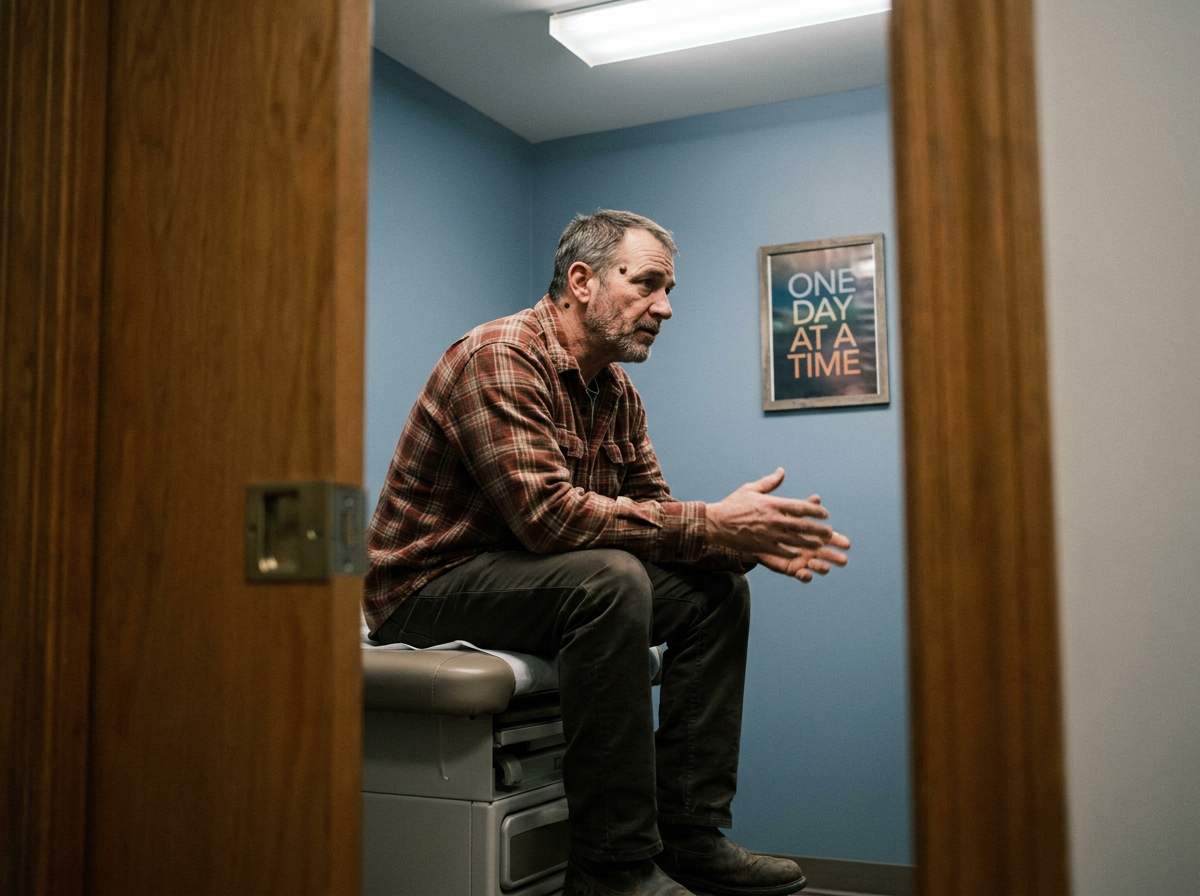
- We do a physical examination of the affected areas.
- We explain what we find in plain words.
- Together, we decide what makes sense next.
That’s it. On the paperwork side, we bill your PIP and handle the insurance coordination so you’re not navigating it alone.
Let’s also name what the first visit is not. It’s not a pitch for a treatment package. It’s not a signed commitment to a fixed number of visits. And it’s not a rushed, in-and-out intake where you feel like a billing code.
If Spanish is your first language, you’ll be seen and heard in Spanish. A real bilingual person, not a translated form handed across a desk. That’s part of same-day access here, not an extra.
What PIP insurance covers and what it means for your visit
PIP stands for Personal Injury Protection. It’s the medical coverage built into your own Florida auto policy, and it’s designed to help cover treatment after a car accident no matter who was at fault. According to the Florida Department of Highway Safety and Motor Vehicles, Florida drivers are required to carry a minimum of $10,000 in PIP coverage.
There’s one rule you deserve to know plainly. To use your PIP benefits, you generally need to be seen by a medical provider within 14 days of the accident. The Florida Statutes (§627.736) set that timeframe. We’re stating it as information, not a scare tactic. If the window matters for you, you should have the facts.
PIP has a coverage cap, and we’ll be transparent about how that works for your situation. Nothing about your care is tied to a settlement or a payout. We treat what’s there.
On the “will I get a bill” worry: we submit to PIP and coordinate the billing directly. Florida insurance rules can change, so we’ll always explain what applies to your specific case at the time of your visit.
The conditions we see most often after a car accident
Most of what comes through our door after a crash falls into a handful of injury types. Here’s a plain look at each.
Whiplash. This is a neck injury from the head being thrown forward and back fast, straining the soft tissue. It often shows up late because of the adrenaline effect. Our assessment checks range of motion and tenderness, and treatment typically involves gentle spinal work and mobility care. We won’t promise a timeline we can’t stand behind.
Neck and upper-back pain. In a rear or front collision, the cervical spine takes a lot of the load as your head snaps. That strain shows up as stiffness and pain through the neck and shoulders.
Headaches after an accident. Many are tension-type, starting at the base of the skull. But some headache patterns point elsewhere. If yours look like something outside our scope, we’ll say so and refer you to the right provider.
Lower back pain. Even a low-speed collision can compress and irritate the lumbar structures. The American Chiropractic Association recognizes spinal manipulation as a common approach for mechanical low-back pain.
Head symptoms. We do not treat concussion as a standalone diagnosis. If you had a head impact, lost consciousness, or have cognitive symptoms, you should be evaluated by the right provider first. That’s a scope limit, and naming it is the point.
What is outside our scope and who to see instead
Being honest about what we can’t help with is part of what tailor-made care means. No two injuries are the same, and we’ll tell you the truth about yours. Here’s where we send you elsewhere.
- Fractures or structural damage that needs imaging beyond our assessment: emergency or orthopedic care.
- Moderate to severe traumatic brain injury: a neurologist or emergency medicine provider. The CDC outlines warning signs like repeated vomiting, worsening headache, slurred speech, or confusion. Those mean the ER, not a chiropractor.
- Internal injuries or symptoms suggesting organ involvement: emergency care first, every time.
- Psychological trauma or PTSD after a crash: this is real, and it’s outside chiropractic scope. We can point you toward appropriate resources.
None of this is a weakness. A clinic that treats everything is a clinic that isn’t looking closely. We’d rather send you to the right person than keep you in a chair that won’t help.
What to expect across your visits, at your own pace
Your care follows a simple arc. The first visit is assessment and explanation. Everything after that is calibrated to what we actually found and how your body responds. We won’t hand you a fixed number of visits on day one, because we don’t know yet, and pretending we do would be dishonest.
On the “how many visits” question: treatment length depends on the examination findings and how you’re responding along the way. We’ll explain our thinking at each step so you can follow it.
Every visit, you have our full attention. We check on how things are feeling, adjust the plan if something’s changed, and tell you what we’re doing and why. There’s no rush here.
Staying consistent with care matters for your recovery. Regular treatment tends to give the body a better shot at healing. We say that because it’s true for your health, and for no other reason.
Before you leave, we’ll ask if we addressed everything. If a new concern popped up, or something we said didn’t land, that’s the moment to raise it. Did we address everything? is a real question, not a formality.
How to reach us and what happens when you do
Reaching us is straightforward, and what happens next is the same whether you call or message: you tell us what happened and how you’re feeling, and we walk you through the next steps. No pressure.
- English-speaking patients: call or text us. Same-day appointments are available.
- Spanish-speaking patients: WhatsApp is the easiest way to reach us. A real person answers, warmly, in Spanish.
We’re in Clermont, FL, serving Minneola, Groveland, and west Orange County. If you have them, bring your insurance card and any accident documentation. If you don’t, come anyway. The paperwork side is handled.
Key takeaways
- You can be seen the same day after a car accident, with no referral needed to start.
- Feeling fine is common; adrenaline can mask injury for 24 to 72 hours or longer.
- Florida PIP covers accident treatment regardless of fault, and you generally must be seen within 14 days to use it.
- We handle PIP billing and insurance paperwork for you.
- We name what’s outside our scope and refer you to the right provider when needed.
- Bilingual care in English and Spanish is standard here, not an add-on.
Frequently asked questions
Can I see a chiropractor the same day as my car accident?
Yes. At Taylor-Made Health & Wellness in Clermont, you can call, text, or message and be seen the same day, including shortly after a crash. You don’t need a referral to start. We’ll examine you, explain what we find in plain words, and handle the insurance paperwork.
Do I need to be checked if I feel fine after the accident?
Feeling fine is common because adrenaline can mask pain for 24 to 72 hours or longer. Getting checked gives you a baseline so you know where you stand. If nothing’s wrong, you’ll know that too. It’s about information, not assuming the worst.
Does insurance cover chiropractic care after a car accident in Florida?
Florida PIP (Personal Injury Protection) is built into your auto policy and covers accident treatment regardless of fault, up to your policy’s cap. To use PIP, you generally must be seen within 14 days of the accident, per Florida Statute §627.736. We coordinate the billing for you.
What conditions do you treat after an auto accident?
We commonly see whiplash, neck and upper-back pain, tension headaches, and lower-back pain. We do not treat concussion, brain injury, fractures, internal injuries, or psychological trauma. For those, we refer you to the right provider first and explain why.
What should I bring to my first visit?
Bring your insurance card and any accident documentation if you have it, such as a crash report. If you don’t have those on hand, come in anyway. We’ll walk you through it, and we handle the paperwork side so you don’t have to.
Come in and tell us what happened. We’ll walk you through what we find, in plain words, and be honest with you about how we can help. Call or text us to set up a same-day visit, or message us on WhatsApp if Spanish is easier for you. We’re here to help.
This article is general information, not medical advice. Your care depends on your specific situation, which we’ll assess in person.
Hurt in a car accident? Learn about our car accident chiropractic care in Clermont, including same-day exams and help with your PIP claim.