

What Chiropractic Care After a Car Accident Actually Looks Like
You can walk away from a crash feeling okay and still be hurt. That’s not a scare tactic. It’s how the body works after a collision, and it’s the single most common reason people put off getting checked when they shouldn’t. This article walks through what chiropractic care after auto accidents actually involves: why delayed pain happens, what care does and doesn’t do, what your first visit looks like, how long recovery takes, and who pays for it in Florida.
We’re a personal-injury chiropractic practice in Clermont, and we see this every week. Here’s the honest version, in plain words.
Why you might feel fine right now and still need to get checked
Feeling fine in the first day or two after a crash is normal. It doesn’t mean nothing happened. Whiplash and other soft-tissue injuries often have a delayed onset of 24 to 72 hours, and sometimes longer. Getting checked is about knowing where you stand, not assuming the worst.
Here’s the reasoning. After a collision, your body floods with adrenaline. That’s a protective response, and one of the things it does is mute pain signals. You feel steady. You tell the officer you’re fine. Then the adrenaline fades over the next couple of days, and the stiffness shows up.
The Mayo Clinic notes that whiplash symptoms often appear within a day of the injury and can include neck pain, stiffness, headaches at the base of the skull, and trouble concentrating.
Common delayed symptoms we hear about:
- Neck or upper-back stiffness that wasn’t there the day of the wreck
- Headaches starting at the base of the skull
- Shoulder tightness
- Trouble focusing or a foggy feeling
None of that means something is seriously wrong. It means it’s worth a calm look, so you know what you’re dealing with.

What chiropractic care actually does for accident injuries
Chiropractic care after a collision works on restricted joint movement, muscle guarding, and the compensation patterns your body builds around an injury. It’s not about “cracking” for its own sake. It’s about restoring normal movement to joints and tissue that took a sudden load.
Think about what happens in a rear-end crash. Your car gets pushed forward, your body follows, but your head lags for a fraction of a second before whipping after it. That head-lag is the problem. The muscles, ligaments, and small joints in your neck absorb force they never had time to brace for.
Spinal manipulation, in plain terms, means gently restoring motion to joints that have locked up or drifted out of their normal range. When a joint stops moving well, the muscles around it tighten to protect it, and that guarding is a lot of what you feel as pain and stiffness.
Now the honest part. Chiropractic care does not treat everything. It doesn’t fix fractures. It’s not the answer for nerve-root compression that needs surgical evaluation, or for internal injuries. According to the American Chiropractic Association, a good exam is meant to sort out what belongs in chiropractic care and what needs a referral. If you need imaging or a specialist, you should be told so plainly.
From our experience, this is what tends to work best: treat what’s actually there, and be straight about what isn’t ours to treat.
What your first visit looks like, step by step
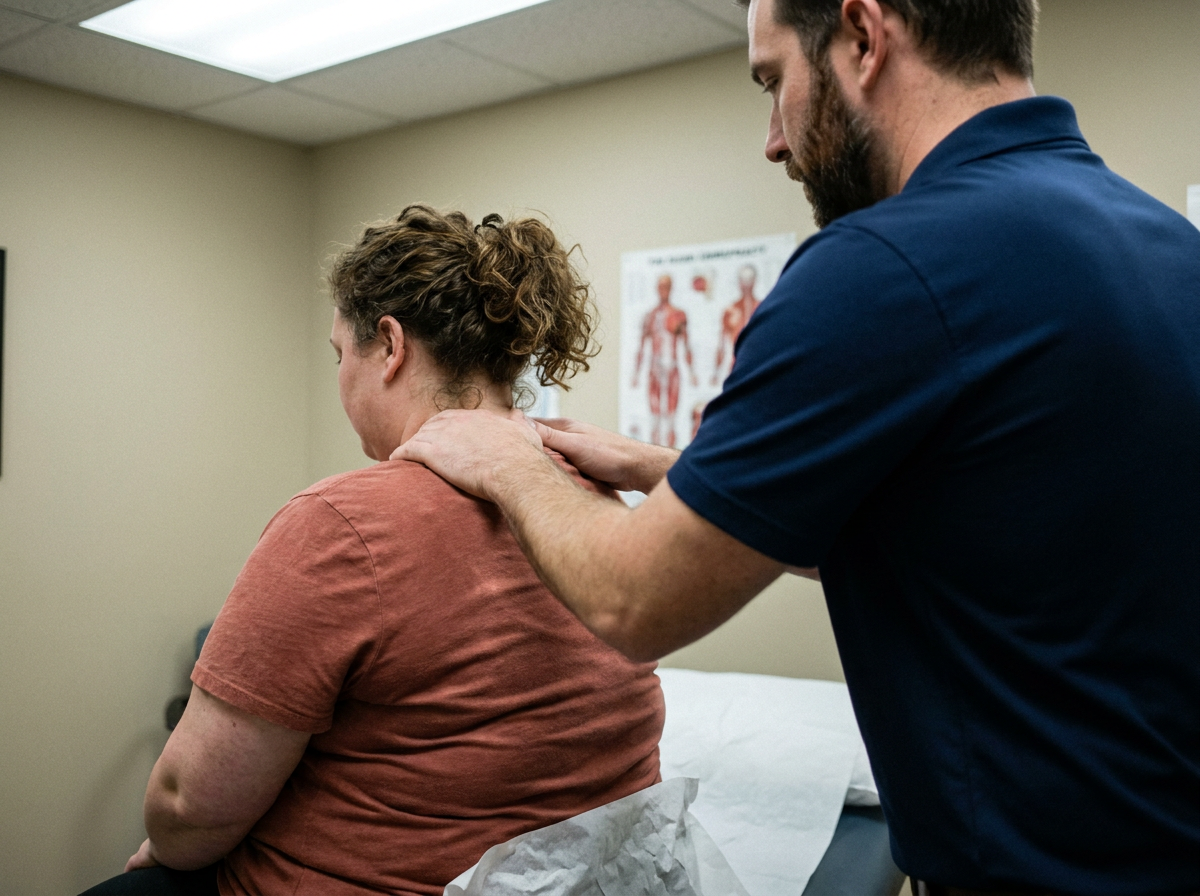
Your first visit is mostly listening and examining, not treatment. The goal is to understand what happened to your body and build a plan around it. Nothing gets rushed, and nothing gets decided before we’ve looked carefully.
Here’s the order it usually goes in.
History. We ask about the accident. How fast, what direction, where you were sitting, whether you braced. Then where it hurts now, what movements make it worse, what makes it better.
Physical exam. We check your range of motion, run orthopedic and neurological tests, and look at your posture. Each of those tells us something different. Range of motion shows what’s restricted. The neurological checks flag anything that points outside chiropractic scope.
Imaging, when it’s warranted. X-rays or an MRI get ordered when the exam suggests we need them, not by default. The National Institute of Neurological Disorders and Stroke points out that many neck injuries are soft-tissue and don’t show on standard X-ray, so imaging is a targeted decision, not a routine one.
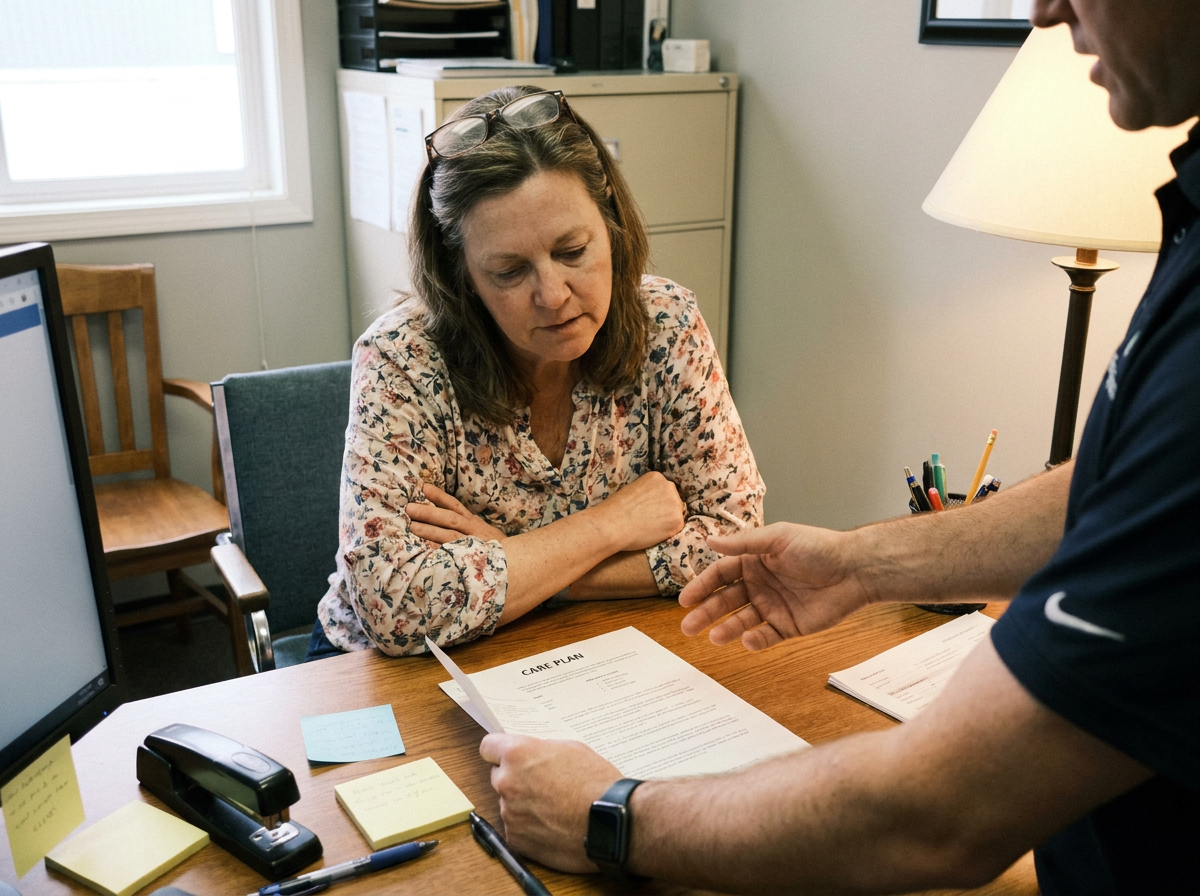
After the exam, we explain what we found and what a care plan would look like. You can ask anything. Are there any other concerns you have? That question is part of the visit, not an afterthought.
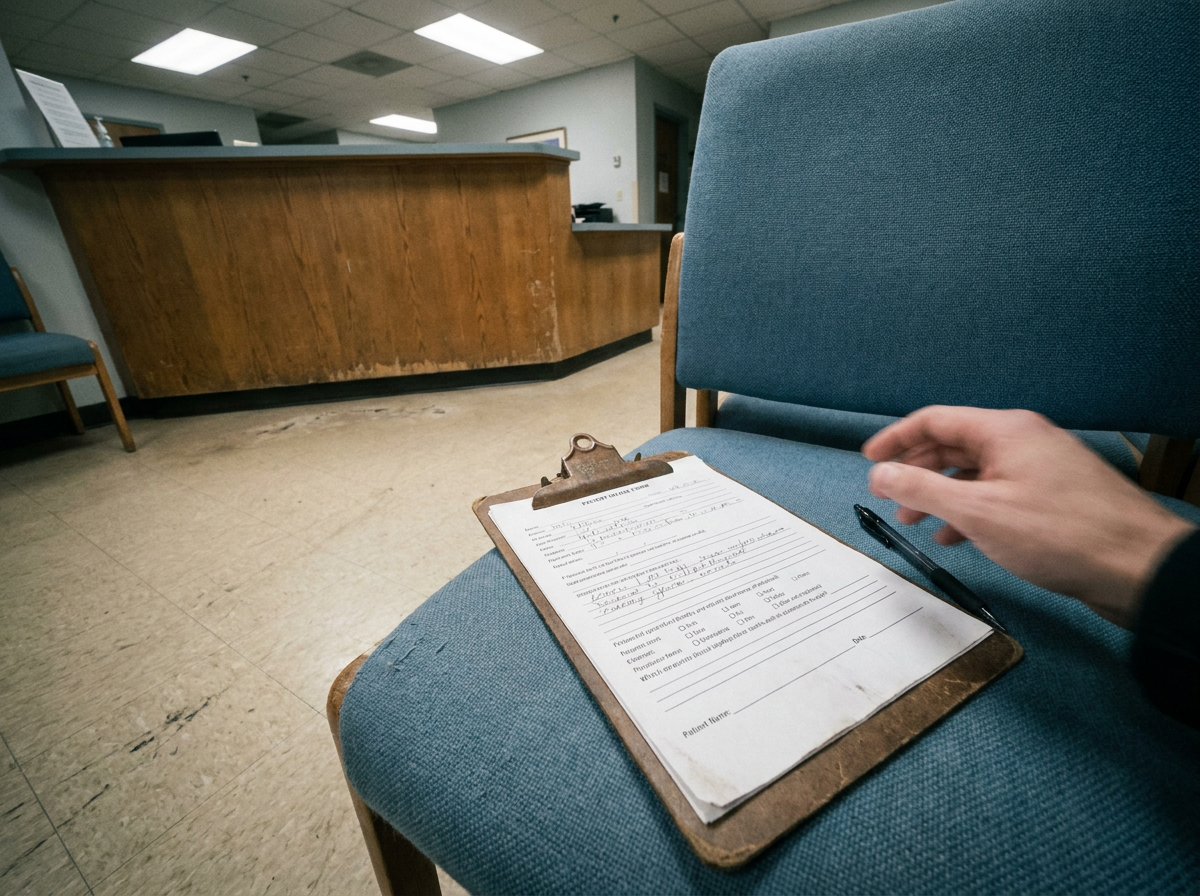
The insurance side, PIP verification and paperwork, happens here at the practice. You don’t sort that out alone.
How long recovery takes and what shapes that timeline
Recovery timelines vary, and no honest practice can promise you an exact endpoint. For mild to moderate whiplash, many people see meaningful improvement over 6 to 12 weeks of consistent care. Some resolve faster. Some take longer. It depends on real factors, not a fixed schedule.
What shapes the timeline:
- Severity of the collision and the injuries it caused
- Your age and prior health, including old neck or back issues
- How quickly you sought care after the crash
- How consistently you attend the plan we build
Research backs the wide range. A review in the BMJ on whiplash-associated disorders found that recovery varies widely between individuals and that early, active care tends to support better outcomes than prolonged rest.
The care itself usually moves in phases. Early on, the focus is calming inflammation and getting movement back. Later, it shifts toward rebuilding strength and function so the injury doesn’t linger or come back.
How many visits? That’s built per person and reviewed as you change. If you’re improving faster than expected, the plan changes. It doesn’t get padded to fill a calendar. We’ll tell you the truth about what we’re seeing.
Who pays and how the insurance side works
In Florida, Personal Injury Protection, or PIP, is designed to cover medical treatment after a car accident regardless of who was at fault. That’s the coverage most accident patients use, and it’s built into your auto policy. Per the Florida Department of Highway Safety and Motor Vehicles, Florida drivers are required to carry PIP coverage.
We handle the PIP billing and the paperwork. You don’t manage that yourself.
Here’s the part people worry about most: getting a surprise bill. So let’s be direct. When PIP applies, it’s designed to cover the treatment your injuries call for, up to your policy limits. We verify your coverage before we start, and we tell you what we find.
There’s a timeline that matters. Florida law requires you to seek medical care within 14 days of the accident for PIP to apply to that treatment. That’s a factual deadline, not a pressure tactic. If you’re near it, it’s worth knowing.
If you don’t have PIP, or your coverage situation is unclear, we’ll walk through your options with you before anything moves forward. No guessing, no vague answers. Just what applies to your situation and what it means.
What we can help with at Taylor-Made, and what falls outside our scope
We treat the injuries chiropractic care is built for after a crash: whiplash, neck pain, upper and lower back pain, headaches coming from the cervical spine, and joint restriction from the collision. If that’s what’s going on with you, this is our lane, and we do it well.
Here’s what falls outside our scope, and we’ll say so the moment the exam points that way:
- Suspected fractures
- Cases that need surgical evaluation
- Severe neurological symptoms, like progressive weakness or loss of function
If any of those show up, we refer you to the right specialist. That’s not us passing you off. It’s us making sure the actual problem gets the right person. Most practices skip this conversation. We think naming our limits honestly is the clearest proof we’re telling you the truth about the rest.
One more thing that matters here. We see patients in English and Spanish. About half the people we treat are Spanish-first, and that care is handled by real bilingual people, not a script someone ran through a translator. You get to explain how you feel in the language you think in.
If you’re hurt and unsure what to do next, you don’t have to figure it out alone. Come in, tell us what happened, and we’ll check what’s going on and explain it in plain words.
Key takeaways
- Feeling fine after a crash is common. Whiplash symptoms often appear 24 to 72 hours later as adrenaline fades.
- Chiropractic care after auto accidents addresses joint restriction, muscle guarding, and soft-tissue injury. It doesn’t treat fractures, surgical cases, or severe nerve problems.
- Your first visit is mostly history and exam. Treatment decisions come after, and you can ask questions.
- Many mild to moderate whiplash cases improve over 6 to 12 weeks of consistent care, but timelines vary by person.
- In Florida, PIP is designed to cover accident treatment regardless of fault, and you must seek care within 14 days for it to apply.
- A good chiropractor names what’s outside their scope and refers you out when needed.
Frequently asked questions
How long does whiplash last after a car accident?
Whiplash recovery varies. Many people with mild to moderate whiplash see meaningful improvement over 6 to 12 weeks of consistent care. Some recover faster, others take longer, depending on the severity of the injury, age, prior health, and how soon care started. No practice can predict an exact endpoint honestly.
Should I see a chiropractor if I feel fine after a car accident?
It’s worth getting checked even if you feel fine. Soft-tissue injuries like whiplash often have a delayed onset of 24 to 72 hours because adrenaline masks pain right after a crash. A calm exam tells you where you stand. Getting checked is about clarity, not assuming something is wrong.
Does PIP cover chiropractic care in Florida?
In Florida, PIP is designed to cover medical treatment after a car accident regardless of fault, up to your policy limits. This can include chiropractic care. Florida law requires you to seek care within 14 days of the accident for PIP to apply. A practice can verify your coverage before treatment begins.
What happens at the first chiropractic visit after an accident?
The first visit centers on history and examination. The chiropractor asks about the accident and your symptoms, then checks range of motion and runs orthopedic and neurological tests. Imaging is ordered only if the exam calls for it. After that, the doctor explains what was found and what a care plan would involve.
Can a chiropractor tell if I need a specialist instead?
Yes. Part of the exam is screening for problems outside chiropractic scope, such as suspected fractures, surgical candidates, or severe neurological symptoms. If the exam points to any of those, a responsible chiropractor refers you to the right specialist rather than treating something outside their lane.
Hurt in an accident and not sure what to do? Come in, tell us what happened, and we’ll check what’s going on and walk you through what we find. We handle the insurance and the paperwork, in English or Spanish. If you have questions before you come in, just ask. We’re here to help. Spanish-first? Message us on WhatsApp and a real bilingual team member will help you get started.
This article is for general information and is not medical or legal advice. Every injury is different. For guidance on your specific situation, come in for an exam or speak with a qualified professional.